The EV charging industry moves fast and staying ahead means more than building great software. It means proving it works, in the field, alongside the rest of the ecosystem.
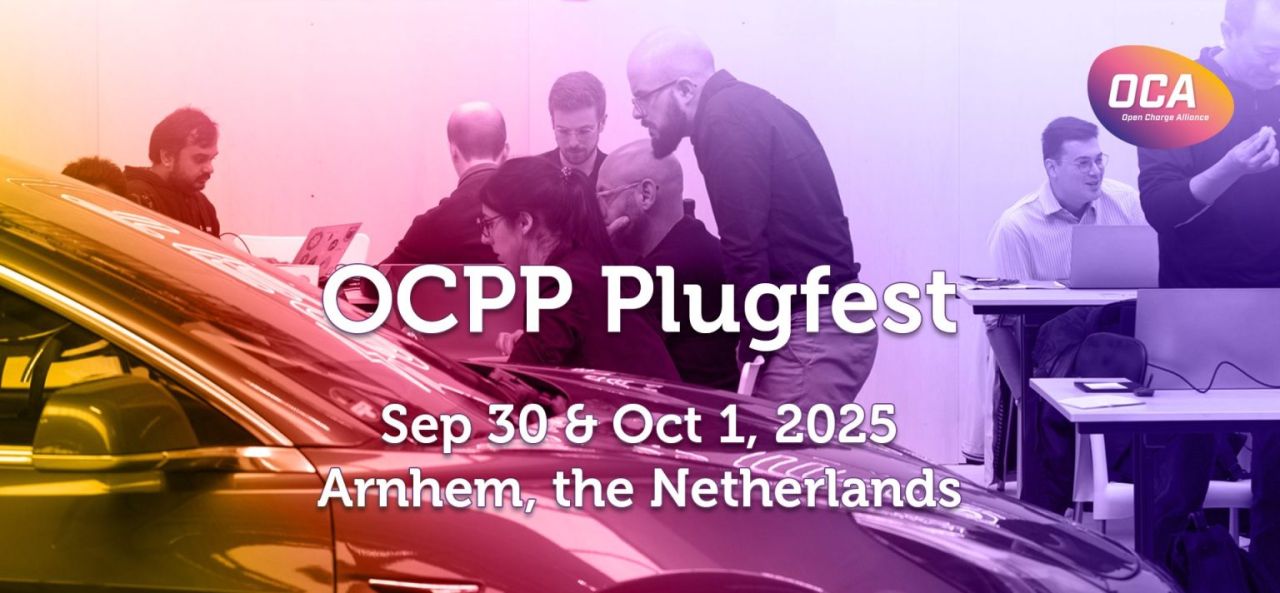
That's exactly what Kyvee did at the latest Plugfest organized by the Open Charge Alliance (OCA), hosted by the outstanding team at ElaadNL. Alongside some of the most forward-thinking companies in e-mobility, we put our OCPP implementation through its paces in back-to-back interoperability testing sessions.
Full-Spectrum OCPP Readiness
While our primary focus at this Plugfest was validating our OCPP 2.0.1 and 2.1 implementation, Kyvee's platform is built to meet operators and hardware partners wherever they are. That means full support for OCPP 1.6 as well, the protocol version that still powers the vast majority of deployed chargers across Europe and beyond.
Whether you're running a legacy fleet on OCPP 1.6 or deploying next-generation hardware with 2.0.1 or 2.1, Kyvee connects. No compromises, no lock-in.
Why Plugfest Matters
Interoperability isn't a checkbox, it's the foundation of a healthy charging ecosystem. The Plugfest format is uniquely valuable precisely because it surfaces the edge cases and protocol nuances that only emerge when real implementations talk to each other. Passing these tests gives CPOs, fleet operators, and hardware manufacturers the confidence they need when choosing a CSMS partner.
For Kyvee, participation isn't just about validation. It's a commitment to open standards and to the European e-mobility community we're helping to build.
Building for the Future, Ready for Today
OCPP 2.x brings critical capabilities, smart charging, ISO 15118 Plug & Charge, device management, and enhanced security, that are becoming increasingly important as AFIR compliance deadlines approach and grid-interactive charging moves from concept to reality. At the same time, the installed base speaks loudly: OCPP 1.6 isn't going anywhere soon, and a CSMS that can't serve it is a CSMS with a limited addressable market.
Kyvee is designed from the ground up to be protocol-agnostic at the connection layer, ensuring that our fleet management, analytics, and payment settlement capabilities are available to any charger, regardless of where it sits on the OCPP spectrum.